
Big Rig RV Park Loveland CO: Will Your RV or Fifth Wheel Fit?
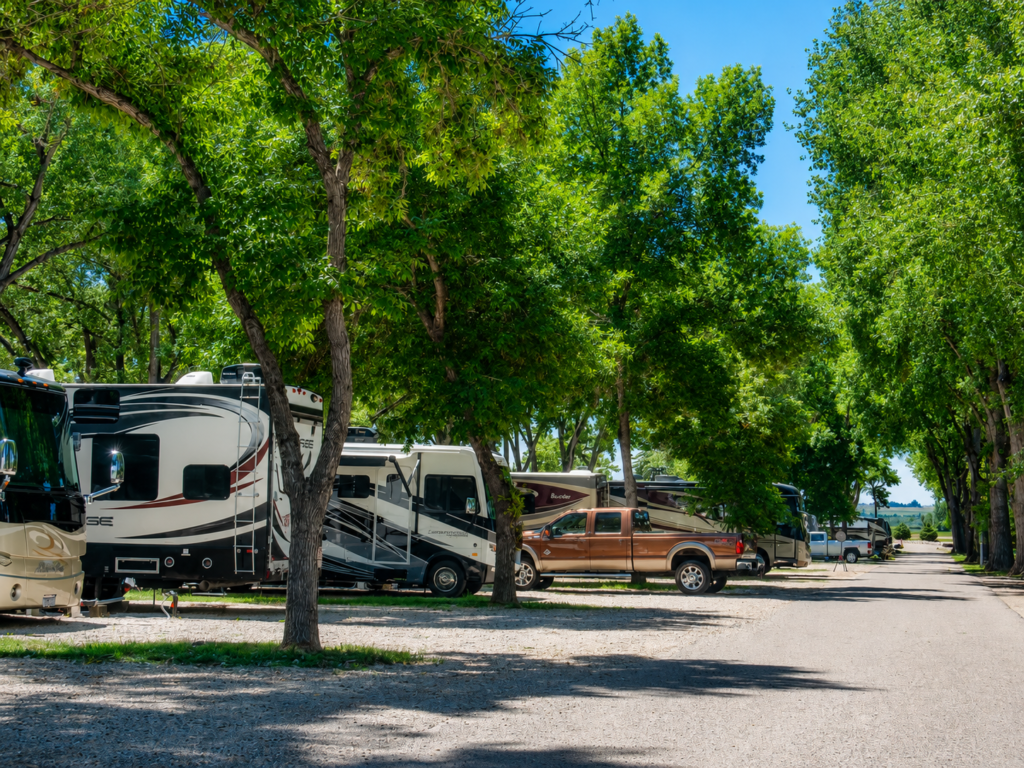
Pulling into a campground with a 40-foot motorhome or a long fifth wheel is a little different from arriving with a compact travel trailer. You need to know more than whether the campground accepts RVs. Will your rig fit comfortably? Is there room for your slides and tow vehicle?
If you’re searching for a big rig RV park Loveland CO, Loveland RV Resort has options designed for larger setups. Pull-through sites are available for big rigs up to 60 feet, along with oversized sites, full hookups, and 30/50-amp electrical service.
Loveland also gives you a practical place to leave the RV set up while you explore Northern Colorado in a smaller vehicle. Fort Collins is to the north, while US-34 takes you west through Big Thompson Canyon toward Estes Park and Rocky Mountain National Park.
Before you reserve, it helps to know your actual dimensions and what questions to ask. Here’s what to consider when bringing a large motorhome, fifth wheel, toy hauler, or long travel trailer to Loveland.
Will Your Big Rig Fit at Loveland RV Resort?
Loveland RV Resort offers pull-through options for big rigs up to 60 feet, along with oversized sites with extra-wide pads. That gives larger Class A motorhomes, fifth wheels, and travel trailers more options than you’ll find at a campground built primarily around smaller RVs.
Still, don’t book based only on the number printed in your RV’s model name. Your actual setup may be longer once you account for a rear bike rack, cargo carrier, tow vehicle, or a car behind your motorhome.
Give the resort your RV type and actual length when you reserve. If you’re towing or bringing another vehicle, mention that as well so the team can help determine which available site works for your setup.
Pull-Through Sites Make Arrival Easier
Backing a long fifth wheel or travel trailer takes concentration even when you’ve done it plenty of times. After several hours on the road, a pull-through site can make arrival much simpler.
Instead of backing into position, you can drive through the site and line up with your utility connections. Departure can be easier, too, because you can generally continue forward once you’re disconnected rather than backing out.
That’s one reason pull-through RV sites in Colorado are worth looking for when you’re traveling with a long rig.
A pull-through doesn’t eliminate the need to check dimensions, though. You still need enough site length for the RV, enough width for your slides, and a plan for your tow or towed vehicle.
Oversized Sites Give You Room Beyond the RV
Length is only part of the equation. Once your slide-outs and awning are open, your RV takes up considerably more space than it does on the highway.
Loveland RV Resort offers oversized sites with extra-wide pads, which can be useful if you have opposing slides or simply want enough space to move around outside without feeling squeezed between your RV and the edge of the site.
Think about your complete setup before reserving. A fifth wheel may fit on the pad, but you’ll still need somewhere for the pickup after unhitching. A motorhome may fit comfortably until you add a rear-mounted bike rack or a vehicle being towed behind it.
The resort’s site and vehicle policies currently allow one vehicle to be parked at a campsite unless resort management authorizes otherwise. If you’ll arrive with an additional vehicle, ask about parking when you make the reservation.
Full Hookups Are Useful for Longer Stays
Large motorhomes and fifth wheels often come with residential-style appliances, multiple air conditioners, larger holding tanks, and other systems that are easier to manage with full hookups.
Loveland RV Resort offers water, sewer, and electrical connections, including 30- and 50-amp service. If your RV requires 50 amps, confirm that service for your assigned site before arrival.
Full hookups are especially convenient when you’re using Loveland as a home base for several days. You can leave the RV connected while you spend the day hiking, sightseeing, or exploring nearby towns instead of worrying about tank capacity between outings.
What Counts as a Big Rig?
There’s no single industry-wide length that automatically makes an RV a “big rig.” At a campground, the term usually refers to an RV that needs more site length, turning room, clearance, or electrical capacity than a smaller travel trailer.
That can include a large Class A motorhome, a long fifth wheel, a toy hauler, or an oversized travel trailer.
Each type of RV handles differently once you leave the highway and start navigating campground roads.
Class A Motorhomes
Large Class A motorhomes can be relatively straightforward to position on a roomy pull-through site, but their height and overall length deserve close attention.
Low branches, narrow turns, and overhead clearance become much more important when you’re driving a tall motorhome. If you’re flat-towing or using a dolly, your complete traveling setup will also be much longer than the motorhome itself.
Depending on the campground layout, you may need to disconnect your towed vehicle before positioning the RV.
Fifth Wheels
Fifth wheels give you plenty of living space, but they also require room for the pickup and trailer to maneuver together.
When choosing a fifth wheel campground in Loveland, don’t look only at the trailer length. Think about the truck you’re using to tow it, the turning space you’ll need, where the truck will go after you unhitch, and how far your slides extend.
A wide pull-through or oversized site can make setup much easier when you’re towing a long fifth wheel with multiple slides.
Toy Haulers and Long Travel Trailers
Long travel trailers and toy haulers come with their own considerations. The length between your tow vehicle and trailer axles affects how much room you need for turns, while longer trailers generally need more space to straighten out before entering a site.
With a toy hauler, you may also need usable space behind the RV if you plan to lower the rear ramp or convert it into a patio. Mention that when you reserve instead of assuming the space behind the pad will be usable.
Measure Your RV Before You Book
Knowing your RV’s actual dimensions is one of the easiest ways to prevent an unpleasant surprise on arrival day.
Don’t rely only on the manufacturer’s brochure or model number. Confirm the dimensions of the RV you’re actually bringing and account for anything you’ve added since it left the factory.
Know Your True Length
Start with the RV itself and include anything that permanently adds length, such as a rear spare tire, ladder, bike carrier, or cargo rack.
Then think about the rest of your setup.
A 40-foot fifth wheel does not create a 40-foot traveling combination once a pickup is attached. Likewise, a 40-foot motorhome towing a car has very different maneuvering and parking needs from the same motorhome traveling alone.
This matters when you’re looking at 60-foot RV sites or a campground that says it accommodates big rigs up to 60 feet. Don’t assume that number means the same thing for every combination. Give the campground your actual setup and let them determine which available site is appropriate.
Check Your Width With the Slides Open
Your RV may fit perfectly on the pad with every slide retracted and still run into clearance problems once you’re set up.
Know how far each slide extends, especially if your RV has opposing slides. Utility pedestals, trees, picnic tables, neighboring sites, and other obstacles can affect how much usable width you actually have.
Do the same for your awning. If sitting outside is part of your trip, you’ll want enough room to open it comfortably rather than discovering that your RV technically fits but your outdoor space doesn’t.
Know Your Maximum Height
Height is easy to overlook until you’re approaching an unfamiliar overpass or low-clearance obstacle.
Measure or confirm your RV’s height at its tallest point, including rooftop air conditioners, antennas, satellite equipment, and other accessories. Keep that measurement somewhere visible from the driver’s seat.
It’s especially useful when your trip includes unfamiliar roads or mountain communities where not every route is suitable for today’s largest RVs.
Bringing a Fifth Wheel to Loveland
Fifth wheels deserve a little extra planning because your trailer and pickup need to work together from the campground entrance all the way to the site.
Ask yourself what happens after you turn into the property. Is there enough room to make the turns comfortably? Can you straighten the truck and trailer before entering the site? Once you’re unhitched, where will the pickup go?
Those questions become increasingly important as your fifth wheel approaches 40 feet.
Think About the Truck and Trailer Together
Your fifth wheel’s listed length tells only part of the story.
A crew-cab long-bed pickup adds substantial length to your traveling combination. You may not need to keep the truck and trailer connected at the campsite, but you do need enough room to maneuver safely before unhitching.
When you reserve, give the resort your trailer length and let them know what you’re towing it with. That small amount of information can make site assignment much easier.
Leave Room for Slides and Your Awning
Some modern fifth wheels have several slide-outs, including opposing slides that significantly increase the width of the RV once you’re parked.
Know roughly how far they extend and where they’re located. Also account for the patio awning if you intend to use it.
An extra-wide site gives you more flexibility, but your individual setup still determines how much room you’ll need.
What to Ask Before Reserving an Oversized RV Site
Instead of calling and asking only, “Are you big-rig friendly?” give the resort enough information to answer the question for your specific RV.
Tell them your RV type, actual length, electrical requirement, number of slides, and whether you’ll have a tow or towed vehicle. Then ask about the site you’re considering.
How Much of the Site Is Usable?
The listed length of a site doesn’t always tell you how much usable parking area you’ll have.
Trees, landscaping, utility connections, picnic tables, and the shape of the campsite can affect where your RV can actually sit. It’s better to ask whether your particular setup will fit comfortably than to base your decision on a single number.
Loveland RV Resort has pull-through options available for big rigs up to 60 feet, but individual setups vary. Always confirm your RV and vehicle details when reserving.
Does the Site Have the Electrical Service You Need?
If your RV uses 50-amp service, make that part of your reservation request.
Large fifth wheels and Class A motorhomes may have multiple air conditioners, residential refrigerators, electric water heaters, washers and dryers, and other equipment that increases electrical demand.
Loveland RV Resort offers both 30- and 50-amp connections, so make sure the site you’re booking matches your RV.
Where Will Your Tow or Towed Vehicle Go?
This is one of the easiest details to overlook.
A fifth wheel leaves you with a pickup after you unhitch. A motorhome may arrive with a car behind it. Ask whether your vehicle can remain at the site and what parking options are available if it cannot.
Because Loveland RV Resort allows one vehicle per campsite unless management approves otherwise, discussing the setup ahead of time is much easier than figuring it out while you’re trying to park.
What Happens If You Arrive Late?
With a large RV, daylight makes your first arrival considerably easier. You can see campground roads, utility pedestals, trees, neighboring rigs, and site boundaries before positioning the RV.
Loveland RV Resort asks guests arriving outside the normal arrival window to contact the office in advance. If traffic, construction, or weather pushes your arrival later than planned, call before you get there and confirm the late-arrival process.
How Early Should You Reserve a Big-Rig Site?
If you specifically need an oversized or pull-through site, don’t assume you’ll have the same availability as someone traveling with a smaller trailer.
Larger sites may be more limited, particularly during summer weekends and busy Northern Colorado travel periods. Once your dates are set, reserving early gives you a better chance of finding a site that works for your RV instead of choosing from whatever remains.
Should You Take a Big Rig Into Rocky Mountain National Park?
Rocky Mountain National Park is close enough for a day trip from Loveland, but taking your entire motorhome, fifth wheel, or travel trailer into the park isn’t always the easiest option.
The park’s campgrounds currently have maximum RV or trailer lengths ranging from 30 to 40 feet depending on the campground, and larger vehicles face restrictions on certain park roads.
For many big-rig owners, the easier plan is to leave the RV set up in Loveland and explore the mountains in a passenger vehicle.
Know the Vehicle Restrictions Before You Go
The National Park Service’s current road information is worth checking before every visit, particularly if you’re driving anything larger than a typical passenger vehicle.
Old Fall River Road is narrow, unpaved, and full of switchbacks. Vehicles over 25 feet and vehicles pulling trailers are prohibited.
Bear Lake Road has its own restriction west of Park & Ride, where vehicles over 21 feet are prohibited. A smaller vehicle or the park shuttle is much more practical when Bear Lake, Sprague Lake, or nearby trailheads are on your itinerary.
Road conditions and seasonal closures can change, so check the current NPS information before leaving the campground.
Set Up Once and Explore in a Smaller Vehicle
Leaving the RV at the resort means you don’t have to retract slides, disconnect utilities, secure everything inside, and maneuver a large rig every time you want to explore.
US-34 takes you west from Loveland through Big Thompson Canyon toward Estes Park. Once you’re there, a passenger vehicle is much easier to park downtown and use around Rocky Mountain National Park.
If the mountains are a major part of your trip, planning where to stay near Estes Park and Rocky Mountain National Park can help you decide which areas make sense to visit from your campsite.
Heading north is just as easy. Loveland keeps Fort Collins within reach for Old Town, Horsetooth Reservoir, breweries, restaurants, and other attractions, without requiring you to bring the RV along. There are also several considerations worth knowing when planning an RV stay near Fort Collins.
Getting to Loveland With a Large RV
With a big rig, the route to your campground matters almost as much as the site itself.
Loveland RV Resort is at 4421 E US-34, just off I-25. If you’re arriving from north or south along the Front Range, I-25 provides direct access to US-34 without requiring you to take your RV deep into the mountains.
Once you’re settled, US-34 continues west toward Estes Park through Big Thompson Canyon.
Plan the Route Before You Leave
A navigation app built primarily for cars may suggest a route that isn’t a good fit for a large motorhome or trailer.
Know your RV’s height, width, weight, and total length before you travel. Compare your route with RV-specific navigation information and check the Colorado Department of Transportation for road closures, construction, crashes, and changing travel conditions.
This becomes especially important when weather or construction affects the route you originally planned.
Explore the Mountain Roads in a Smaller Vehicle
Big Thompson Canyon is one of the scenic parts of the drive between Loveland and Estes Park, but it includes curves, elevation changes, and sections where you’re better off focusing on the road than looking at the scenery.
Once your RV is set up, taking a pickup, tow car, or other passenger vehicle west into the mountains gives you much more flexibility. Parking around Estes Park and at mountain trailheads is also easier without a long motorhome or trailer behind you.
Give Yourself Time to Get Settled
Try not to turn arrival day into a race against sunset.
Traffic, construction, weather, fuel stops, and other delays can quickly add time to a long travel day. Giving yourself some extra room in the schedule lets you inspect the campsite before positioning the RV.
When you arrive, locate the utility pedestal, sewer connection, trees, picnic table, and any other obstacles before pulling into your final position. It’s easier to make an adjustment then than after you’ve leveled the RV and started connecting everything.
Big Rig Arrival Checklist
Before you leave home, double-check a few details that can save you trouble on arrival day.
Confirm Your Setup With the Resort
Make sure your reservation reflects your actual RV, especially if anything has changed since you booked.
Confirm your:
- RV type and actual length
- number and location of slide-outs
- 30- or 50-amp electrical requirement
- tow or towed vehicle
- expected arrival date and check-in time
Having those details squared away before your travel day makes your arrival much simpler.
Know Your Height and Weight
Keep your RV’s maximum height somewhere easy to see while you’re driving, and remember that rooftop equipment counts.
You should also know the relevant weight ratings for your motorhome, trailer, and tow vehicle. The National Highway Traffic Safety Administration’s towing safety information covers trailer loading, tires, tow equipment, and other basics worth reviewing before a long trip.
Check Your Tires
Before leaving, check tire pressure when the tires are cold and inspect the tread and sidewalls for damage or unusual wear.
Don’t forget the tires on the pickup, trailer, or towed vehicle. Carrying a reliable pressure gauge also makes it easier to keep an eye on your tires as temperatures and elevations change during the trip.
Walk the Site Before Opening Your Slides
Once you’re parked and leveled, take one walk around the RV before opening everything.
Make sure your slides won’t hit a tree or utility pedestal, the awning has enough room, and your hookups can reach comfortably. A minute spent checking clearance is much easier than discovering the problem halfway through extending a slide.
Frequently Asked Questions About Big Rig RV Camping in Loveland
Yes. Loveland RV Resort offers pull-through options for big rigs up to 60 feet as well as oversized sites with extra-wide pads. Provide your RV type, actual length, slides, and tow or towed vehicle information when reserving so the resort can help match you with an appropriate site.
Yes. Pull-through sites are available and can make arrival and departure easier with a large motorhome, fifth wheel, or long travel trailer. Reserve early if a pull-through site is important for your setup.
Yes. The resort offers 30- and 50-amp electrical connections along with water and sewer hookups. Confirm the service available at your assigned site when reserving.
Large RVs can travel on some park roads, but restrictions apply in certain areas, parking can be limited, and park campgrounds have RV and trailer length limits. Leaving a large RV at your campground and exploring in a smaller vehicle is often easier.
Trailers aren’t universally prohibited on Trail Ridge Road, but towing a long fifth wheel across a high mountain road is very different from driving it in a passenger vehicle. Check current NPS road conditions, weather, and restrictions before deciding whether the route is appropriate for your setup and driving experience.
Loveland RV Resort states that pull-through options are available for big rigs up to 60 feet, but site dimensions and individual RV setups vary. Provide the resort with your RV length, tow or towed vehicle, and slide configuration so the team can confirm an appropriate available site.
Bring Your Big Rig to Loveland RV Resort
Traveling Northern Colorado with a large motorhome or fifth wheel is easier when you know your campsite can handle your setup. Loveland RV Resort offers pull-through options for big rigs up to 60 feet, oversized sites with extra-wide pads, full hookups, and 30/50-amp electrical service.
Its location just off I-25 on US-34 also gives you a convenient place to leave the RV set up while you explore Fort Collins, Estes Park, Rocky Mountain National Park, and the surrounding area in a smaller vehicle.
Before reserving, review the Loveland RV Resort policies and have your RV dimensions and vehicle information ready. Contact the resort with your setup details so the team can help you find an available site that works for your rig and your Northern Colorado stay.
Great info especially for beginners!